What Exactly is Robotics in Learning? What can it Accomplish?
Robotics is a way for children to have hands on experience to create while also learning STEM concepts, it also involves critical skills such as computational and logical thinking (Barakat, 2011; García-Peñalvo & Mendes, 2018). In order to use robotics in education, students will be exposed to programming as well as the robots themselves. Not only does this increase engagement and motivation among students, but it also teaches students to think critically about how to solve a problem (Barakat, 2011). This also directly relates to the computational thinking discussed in my previous blog, and can have a variety of benefits for a child, learning skills that will be beneficial for them throughout their lives (García-Peñalvo & Mendes, 2018).
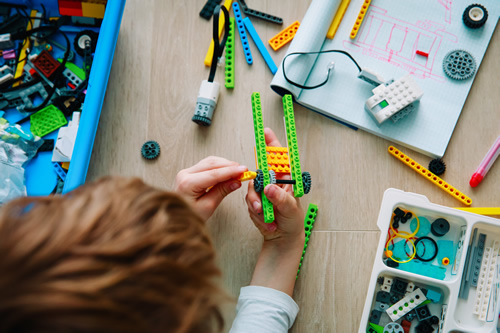
With robotics also comes with the added bonus of programming, children will be able to learn to control robots through their programming and develop their problem solving skills, and even kindle student interest in STEM subjects, with engineering and science in particular. Robotics is essential in engineering, being a part of the education of almost every engineering school (Barakat, 2011; Weinberg & Yu, 2003).
In fact, robotics learning has already started to disseminate in highschools, however it is barely utilised at the primary level (García-Peñalvo & Mendes, 2018; Spolaôr & Benitti, 2017) . While high school students can benefit immensely from the use of robotics learning, primary students can similarly gain from the experience as well (Curto & Moreno, 2016).
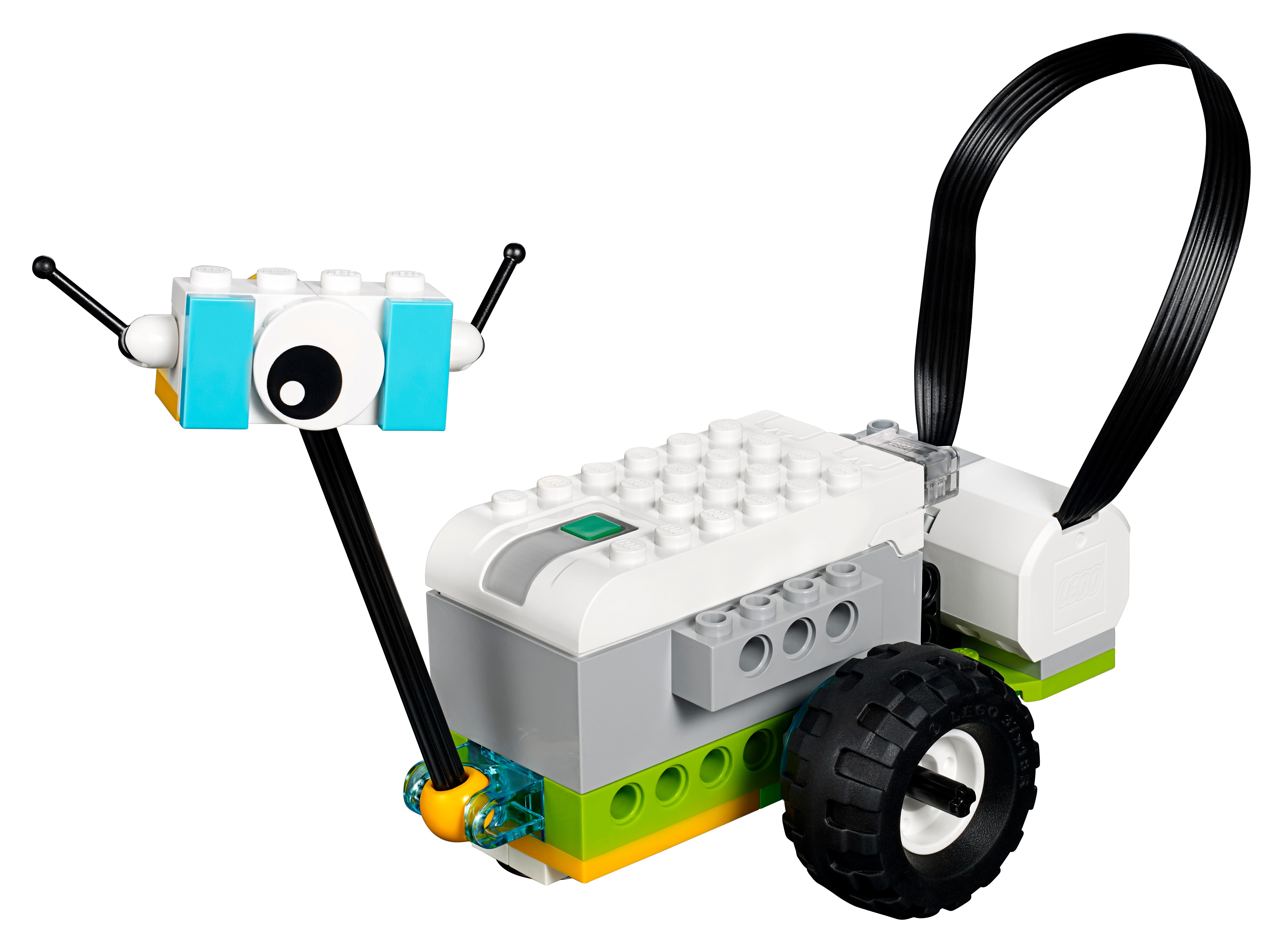
Why WeDo?
While there are many different robotic tools and programs out there, in fact, many are also more sophisticated, and can potentially provide more variety of tools for students to use compared to WeDo (Curto & Moreno, 2016). However they can also be alot more difficult to use, WeDo is suitable for primary school students or for learners who are less advanced, providing a simple yet comprehensive method for robotics learning.

While it is simpler to use, it still has numerous options and variations for students to learn from, anything ranging from preset lessons/projects, as well as community creations that students can build. Students will not only be engaged with the lesson, but it can also help foster their creativity, problem solving skills and even computational thinking (García-Peñalvo & Mendes, 2018).
Robotics education is already a major facet of engineering, as well as disseminate in high schools, however it shoud be integrated in primary school learning as well. Not only does it encourage engagement and motivation among students, but also provides them with various skill such as problem solving, logical thinking and computational thinking, and can be extremely beneficial to the education of students.
References:
Barakat, N. (2011). Balanced Integration of Theory and Applications in Teaching Robotics. The International Journal Of Learning: Annual Review, 18(1), 245-258. doi: 10.18848/1447-9494/cgp/v18i01/47441
Curto, B., & Moreno, V. (2016). Robotics in Education. Journal Of Intelligent & Robotic Systems, 81(1), 3-4. doi: 10.1007/s10846-015-0314-z
García-Peñalvo, F., & Mendes, A. (2018). Exploring the computational thinking effects in pre-university education. Computers In Human Behavior, 80, 407-411. doi: 10.1016/j.chb.2017.12.005
Spolaôr, N., & Benitti, F. (2017). Robotics applications grounded in learning theories on tertiary education: A systematic review. Computers & Education, 112, 97-107. doi: 10.1016/j.compedu.2017.05.001
Weinberg, J., & Yu, X. (2003). Robotics in education: Low-cost platforms for teaching integrated systems. IEEE Robotics & Automation Magazine, 10(2), 4-6. doi: 10.1109/mra.2003.1213610
 EDUC3620 - Digital Creative and Learning
Great Blog post on Robotics. I liked how you made a connection to Computational thinking and how these emerging technologies can assist the individual for future learning matters. With certain Robotics being quite difficult to navigate, I like how you mentioned and incorporated WeDo as a easier robot to use and function- I must check it out.
Thankyou!
LikeLike